

Galleria degli Uffizi Florence: What the Uffizi Gallery Is Known For
The Galleria degli Uffizi occupies the first and second floors of a building designed by Giorgio Vasari and constructed between 1560 and 1580. Cosimo I de’ Medici commissioned it in the mid-16th century as administrative offices. It opened as a public museum in 1769 at the direction of Grand Duke Peter Leopold.
The collection spans paintings from the 13th to the 20th centuries, with works by Giotto, Botticelli, Leonardo, Raphael, Michelangelo and Caravaggio, alongside ancient sculptures. That range gives the visit a broad sweep through the history of Italian art, rather than a focus on one period or artist.
How to Plan a Visit
Set aside time to move through both floors and the collection’s many periods; the available visitor information does not specify a standard visit duration. If you have a particular artist or work in mind, check the museum’s current collection information before you go, since no specific gallery route or display location is listed here.
The museum advises buying tickets in advance, particularly during very busy periods, to reduce waiting at admission. Keep your ticket with you throughout the visit: it allows one entry only, cannot be reused, and staff may ask to see it.
Large items—including backpacks, bags and umbrellas—must go in the free cloakroom before entry. Plan to leave time for that step before you join the entrance queue.
Tickets, Reservations and Entry
Regular single-entry tickets are listed at €25 when purchased on the day of entry and €29 when purchased before the entry date. Reduced tickets are €2, and eligible visitors may enter free. The official Uffizi ticket options include online purchase, telephone booking and the ticket office under the loggia in the Uffizi square.
A five-day PassePartout ticket covers the Uffizi, Pitti Palace and Boboli Gardens. You must book the Uffizi as your first museum visit with this ticket. The listed price is €40, or €58 with the Vasari Corridor included.
The first Sunday of each month is a free-admission day. Advance ticket purchases are not available for those days, and priority access is generally not provided, apart from specified visitor categories. Ticket prices and arrangements can change, so check the official site before you go.
Opening Hours and Closure Days
The Uffizi is open Tuesday through Sunday, 8:15 a.m. to 6:30 p.m. It is closed on Mondays, January 1 and December 25. The ticket office closes at 5:30 p.m.; visitors are asked to proceed to the exit at 6:30 p.m.
For ticket questions, the call center is open Monday through Sunday, 8:00 a.m. to 7:00 p.m. You can call 800 615 615, or +39 055 0354135 from abroad and mobile phones.
Accessibility and Visitor Rules
An access ramp is available on Via della Ninna, and the museum has lifts. Wheelchairs whose combined weight with the visitor exceeds 230 kg or whose length exceeds 120 cm are not allowed. Toilets equipped for visitors with disabilities are listed on all floors; ask staff about accessible toilets on the second floor.
Personal or study photography is permitted, except for works on loan to temporary exhibitions. Flash, selfie sticks, tripods, stands and professional photographic equipment are prohibited. Other uses require authorization and may incur a fee.
Groups may have no more than 16 people, including guides and accompanying leaders. Groups of more than six people, including the guide, must use headphones.
Pairing the Uffizi with Nearby Sights
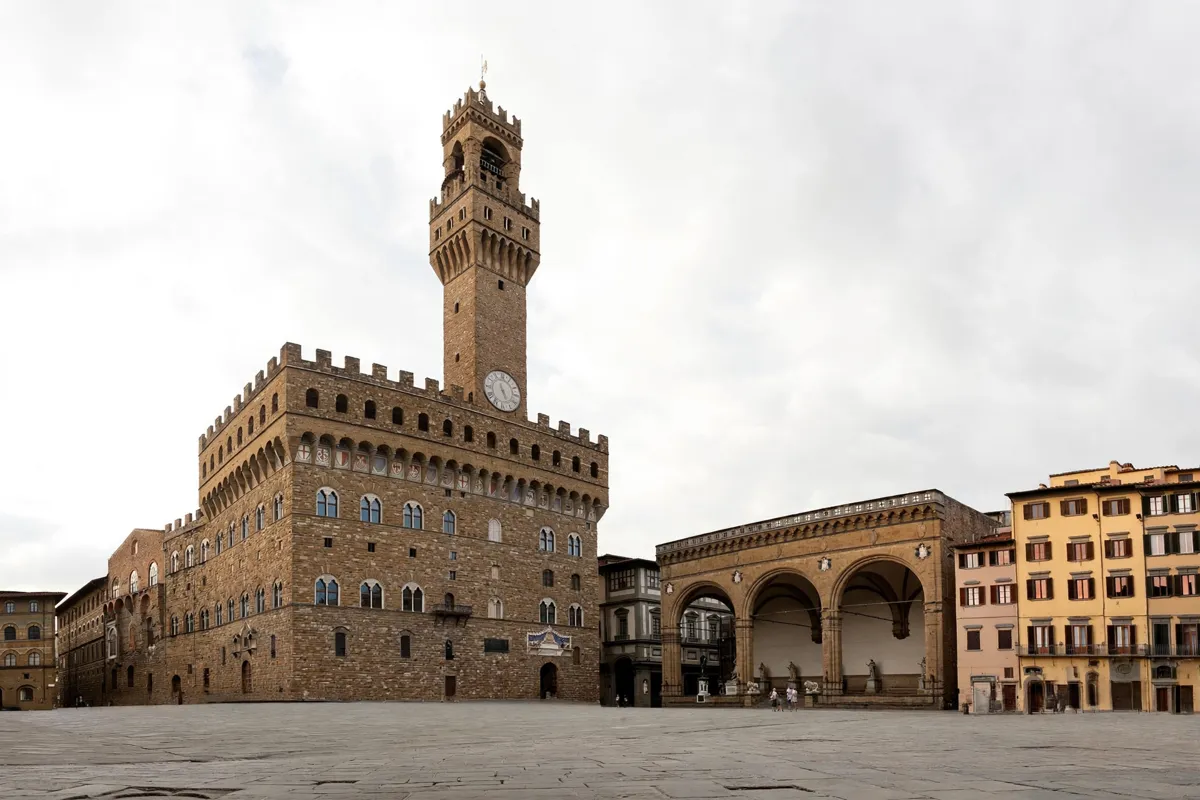
The Uffizi Galleries museum complex also includes Boboli Gardens, while Pitti Palace stands across the Ponte Vecchio from the Uffizi. If you choose the five-day PassePartout ticket, remember to book the Uffizi as the first museum visit; the ticket also covers the other two sites.
For another Florence walk, connect your day with this route through the old town from San Lorenzo. The Basilica di San Lorenzo and Medici Chapel guide covers another nearby historic stop. The Emerald Palace is about a 13-minute walk from Florence city centre.