

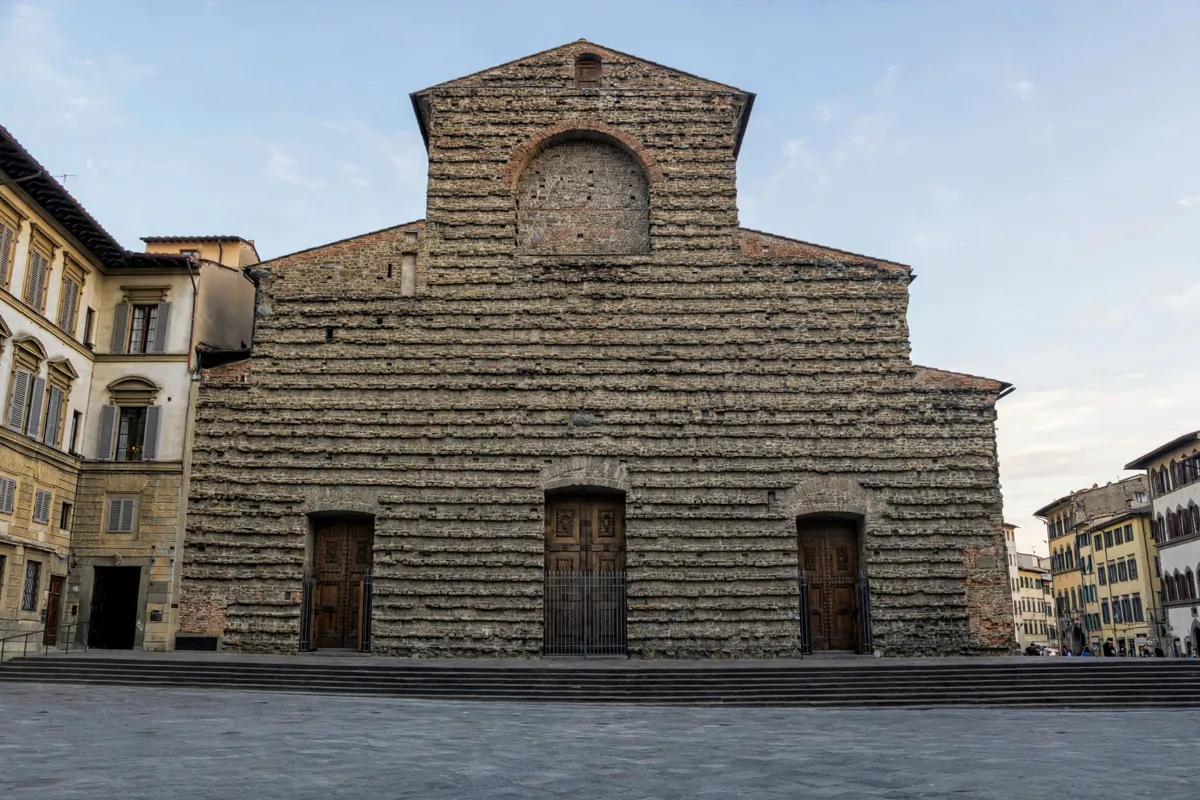
Start in San Lorenzo
San Lorenzo makes a natural starting point for a Florence old town walk. From Emerald Palace, Florence’s city centre is about a 13-minute walk. Begin around Piazza San Lorenzo, where the Basilica of San Lorenzo dominates the square. The Medici Chapels are nearby in Piazza Madonna degli Aldobrandini, and Mercato Centrale is close by too.
The basilica was the Medici family’s chosen church, and the surrounding district remains closely associated with the family’s presence in Florence. If you want more context before setting off, read this visitor guide to San Lorenzo and the Medici Chapel. For a food-focused pause or a closer look at the market, use the Central Market Florence guide.
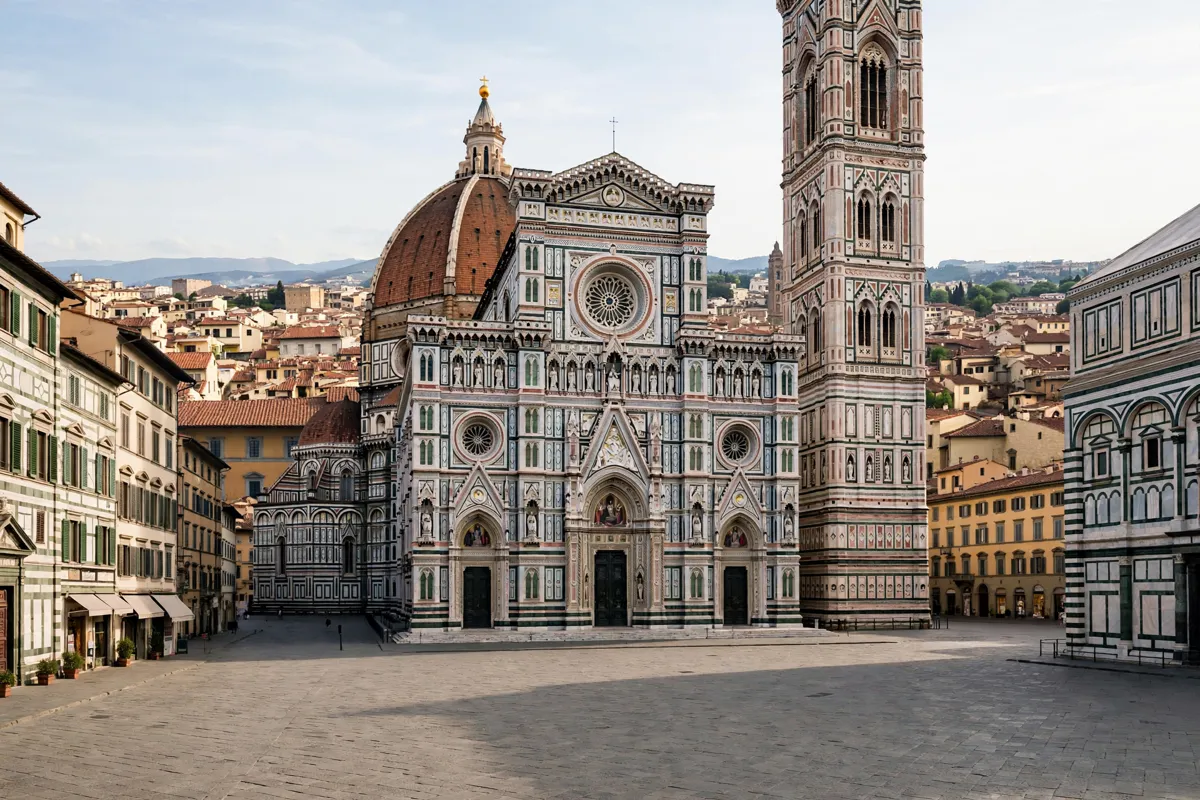
Walk to Piazza del Duomo
From San Lorenzo, continue towards Piazza del Duomo and Piazza San Giovanni, the city’s religious centre around the Cathedral and Baptistery.
The Cathedral of Santa Maria del Fiore and Giotto’s Bell Tower were built during the fourteenth century; Brunelleschi’s Dome was completed in the following century. Take time to look at the group of buildings together before deciding whether to go inside any of them.
The Cathedral is open Monday through Saturday from 10:15 a.m. to 3:45 p.m. Admission is free and no ticket is required, but it closes on Sundays and religious celebrations.
The Baptistery is open daily from 8:30 a.m. to 7:30 p.m., with a 1:30 p.m. closing on the first Sunday of each month. The Opera del Duomo Museum is open daily from 8:30 a.m. to 7:00 p.m. and closes for maintenance on the first Tuesday of each month.
To visit the monuments beyond the Cathedral, you need an Opera di Santa Maria del Fiore pass. The Brunelleschi Pass includes the Dome, Bell Tower, Baptistery, Museum and Santa Reparata.
It costs €30 for adults, €12 for visitors aged 7–14, and is free for children aged 0–6. The Dome climb takes approximately 45 minutes, including the climb itself, and involves 463 steps with no elevator. The Bell Tower also has no elevator and involves 414 steps.
The Museum has elevator access, and wheelchairs are available at the Cathedral and Museum entrances. Opening arrangements, prices and access details can change, so check the Opera di Santa Maria del Fiore’s official site before you go.
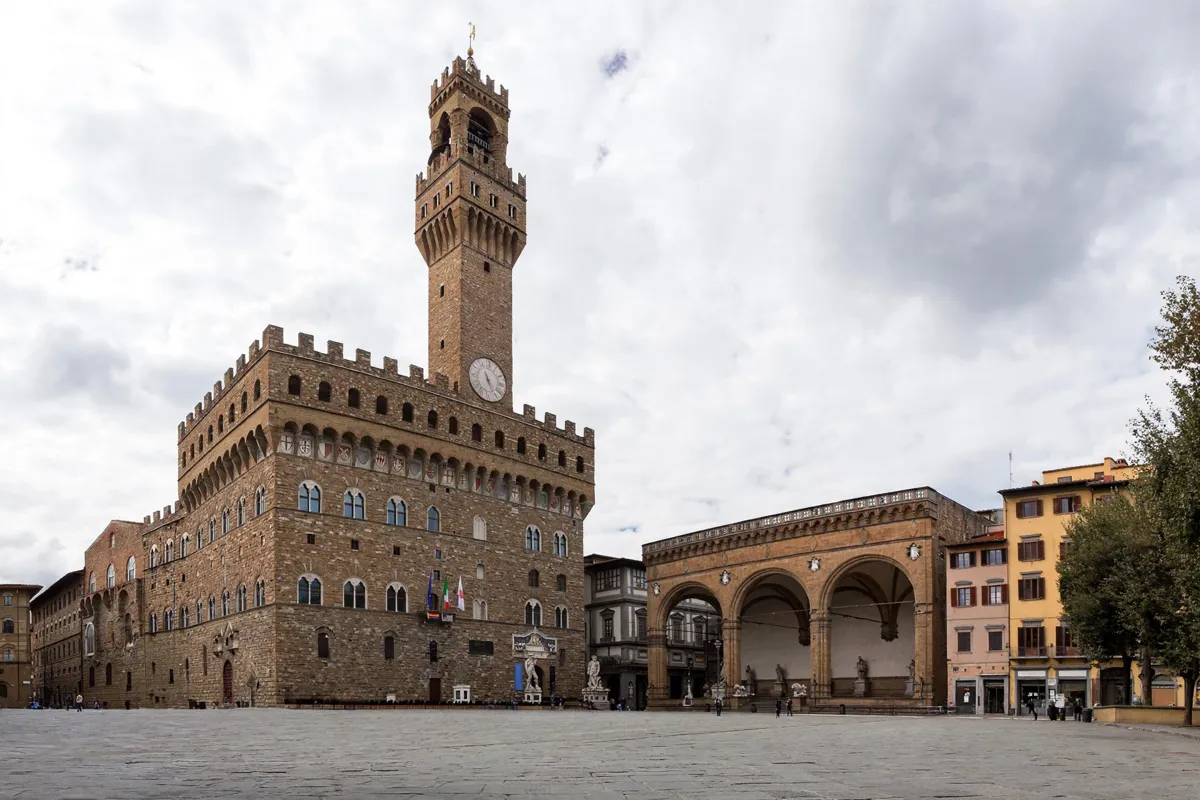
Continue Through Piazza della Signoria
From the Duomo area, make your way to Piazza della Signoria, Florence’s historic civic and political centre. The square developed alongside Palazzo Vecchio during the thirteenth and fourteenth centuries. It offers a change of pace from the religious complex: here, civic architecture and outdoor sculpture share the same public space.
Look for the sculptures in the Loggia dei Lanzi, including Cellini’s Perseus and Giambologna’s Rape of the Sabine Women. The David outside Palazzo Vecchio is a copy; the original is in the Galleria dell’Accademia.
If you plan to visit Palazzo Vecchio’s museum, its entrances are on Piazza della Signoria and Via dei Gondi. Visitors with mobility disabilities are directed to use the side entrance on Via dei Gondi. The mezzanine, rampart walk, tower and some rooms used for educational activities are not accessible.
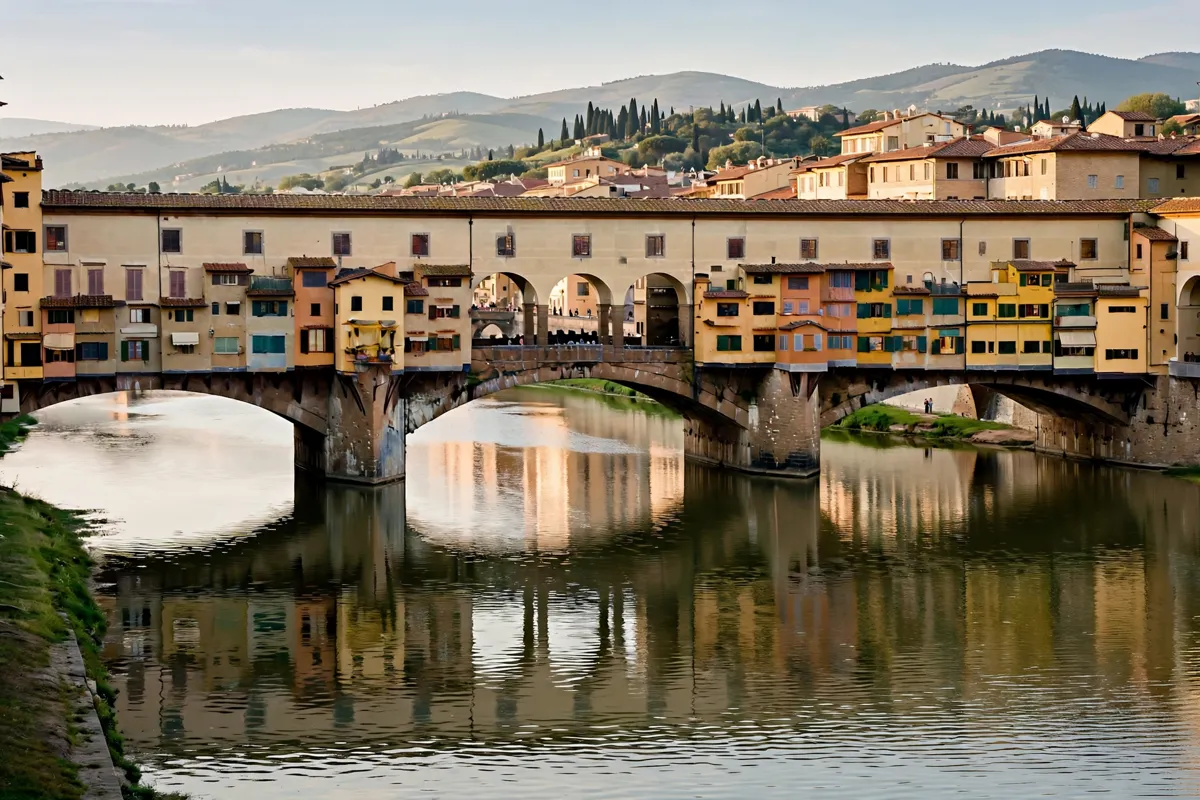
Cross the Arno at Ponte Vecchio
Continue south to the Arno and cross Ponte Vecchio, whose shops line both sides of the bridge. Built in 1345, probably to a design by Taddeo Gaddi, it has three arches supported by two pillars. Goldsmiths’ workshops replaced the former butchers’ and fishmongers’ shops in 1593.
Above the bridge runs the Vasari Corridor. Giorgio Vasari built it in 1565 on commission from Cosimo I, creating a route between Palazzo Vecchio and Palazzo Pitti through the Uffizi.
From the bridge, you can see how Florence’s historic architecture meets the river; the crossing also connects the walk’s central squares with the streets on the other side of the Arno.
Optional Detours and Shortcuts
Use your time in San Lorenzo to choose a focused detour rather than trying to fit every nearby landmark into the same stretch. The guide to Basilica di Santa Maria Novella can help you plan a separate church visit.
Around the Duomo, the Museum offers elevator access if stairs are not suitable, while the Dome and Bell Tower climbs both involve hundreds of steps and have no elevator.
At Piazza della Signoria, you can keep the walk outdoors and see the Loggia dei Lanzi sculptures, or add the Palazzo Vecchio museum. Its side entrance on Via dei Gondi is the designated entrance for visitors with mobility disabilities, though several areas inside are not accessible.
Access, Footwear and Timing
Florence’s historic centre is a limited-traffic zone, and access, circulation and parking are regulated. Many central streets and squares are pedestrian areas where vehicle circulation is prohibited; these zones are marked by roadside signs.
If you are arriving by car, check the City of Florence’s current rules before entering the centre. The city also publishes a live road and mobility works page, so look for current notices close to your walk rather than relying on a fixed construction status.
The City of Florence marks Piazza del Duomo and Ponte Vecchio as accessible in its visitor information, but street and square surfaces or conditions can vary. For questions about accessibility or traffic conditions, contact the City of Florence Tourist Contact Center at +39 055 000.
Its published hours are Monday through Saturday, 9 a.m.–7 p.m., and Sunday, 9 a.m.–2 p.m. Plan monument visits around their opening patterns and allow time for the route between squares.