

Choosing a Florence Park or Garden
The parks in Florence range from formal historic gardens to green spaces beside a panoramic square. Boboli is known for its avenues, sculptures and fountains; Bardini combines a Baroque staircase, woodland and an agricultural section. Around Piazzale Michelangelo, several smaller gardens and parks sit close to the city’s famous skyline.
For a garden visit with plenty of features to see, start with Boboli. Bardini offers a different layout, with a central staircase leading uphill to a Belvedere. If you want to pair a viewpoint with nearby green space, head to Piazzale Michelangelo and consider the Rose Garden or Michelangelo Park.
You can also fit garden time around a walk through Florence’s old town, or plan a green-space break between visits using this guide to choosing museums in Florence.
Florence city centre is about a 13-minute walk from Emerald Palace, a useful starting point for getting around the city.
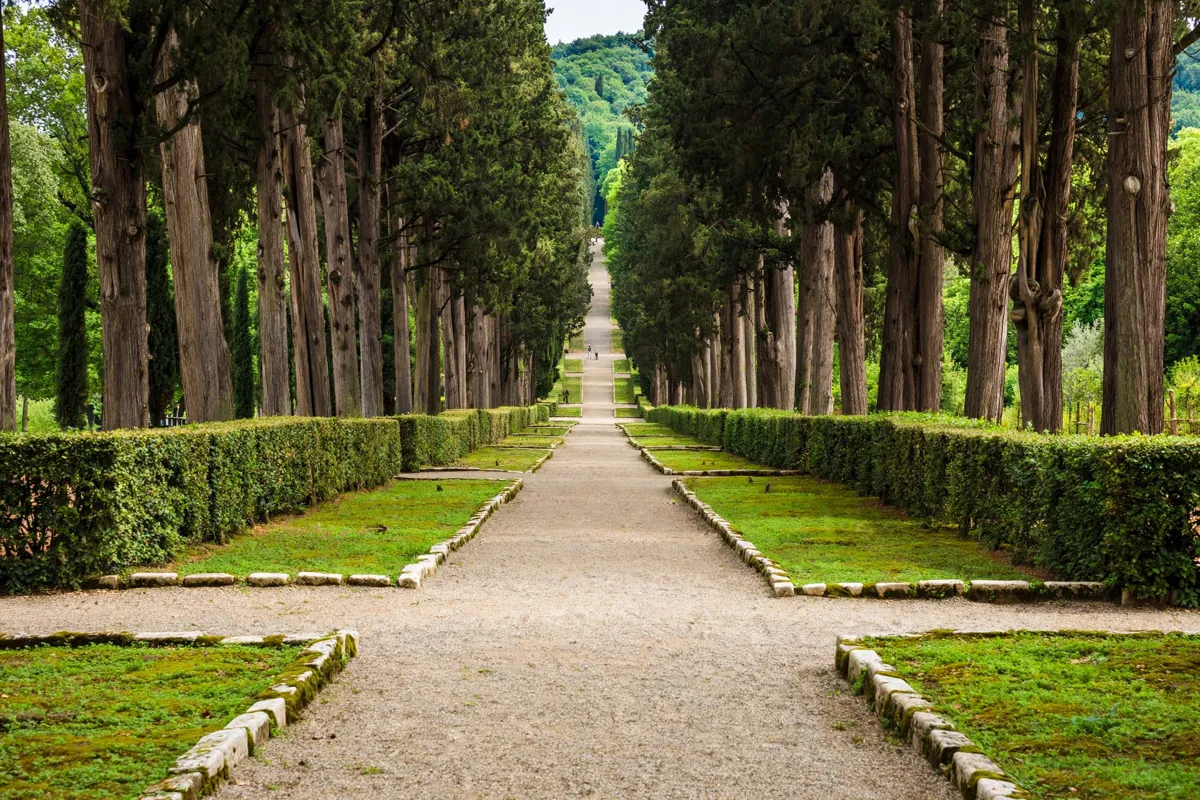
Boboli Gardens
Behind Palazzo Pitti at Piazza de' Pitti, 1, Boboli Gardens opened to the public in 1766. The Medici established its Italian-style design, with formal avenues, grottoes, statues and fountains. The garden covers about 30 hectares, so allow time to move between its different areas.
Highlights include the amphitheatre, Grotta del Buontalenti and Roman and Renaissance statues. Look for the terraced Kaffeehaus pavilion and the Lemon House, built between 1777 and 1778. Boboli’s entrances and exits are at Palazzo Pitti, Via Romana (Annalena), Forte Belvedere and Porta Romana; ticket offices are at Annalena, Porta Romana and Forte Belvedere.
Boboli is partly accessible. Gravel and pebble paths include slopes of up to 20 percent, and wheelchair users are advised to come with an accompanying person. Accessible itineraries are available; you can contact the Uffizi Accessibility and Inclusion Department at uffiziaccessibili@cultura.gov.it or +39 055 2388617, Monday–Friday, 9:30–16:30.
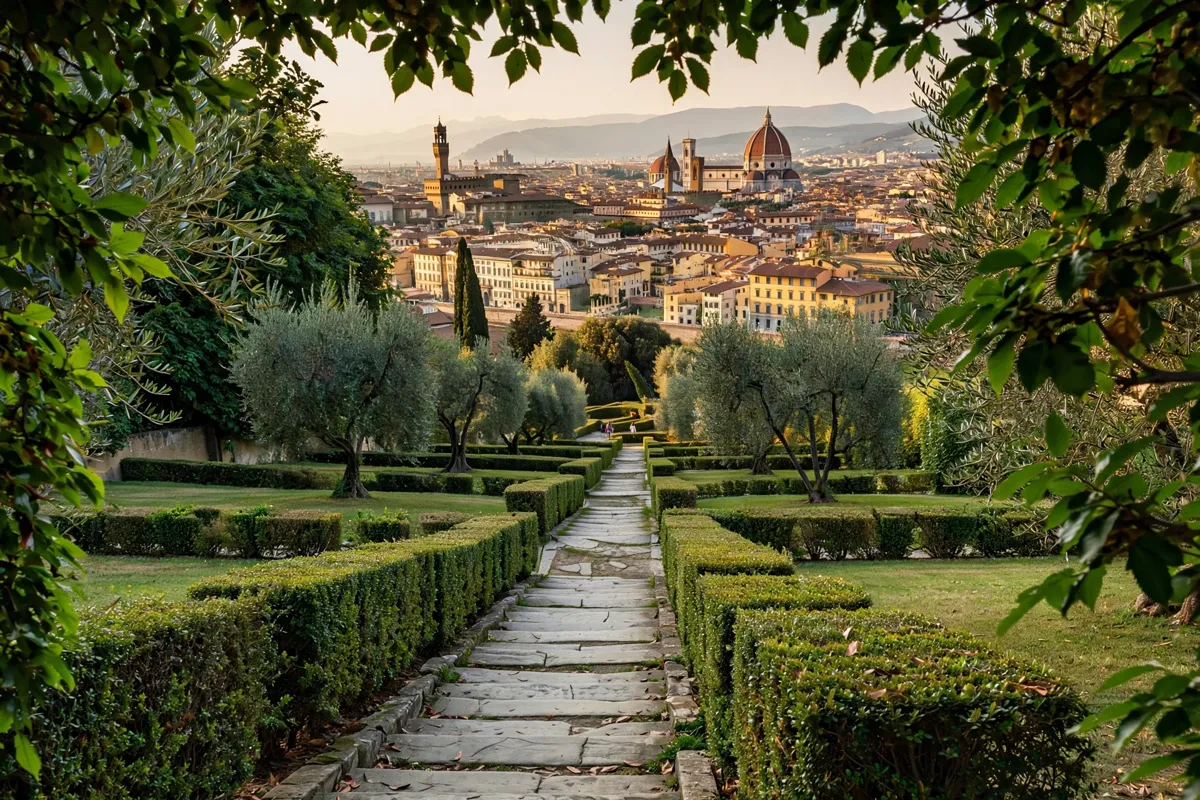
Bardini Garden and Its Views
At Via de' Bardi, 1, Bardini Garden brings together three distinct settings: a central Baroque staircase leading to a Belvedere, an English-style wood and an agricultural section beside the medieval city walls. The climb through these different areas leads toward views over Florence.
The garden’s separate properties were reunited in the 19th century. After a period of neglect, antiquarian Stefano Bardini bought and restored the garden and Villa Manadora.
Bardini is partly accessible, but its gravel-and-earth paths are uneven and include multiple rises and drops. The garden advises visiting with an accompanying person.
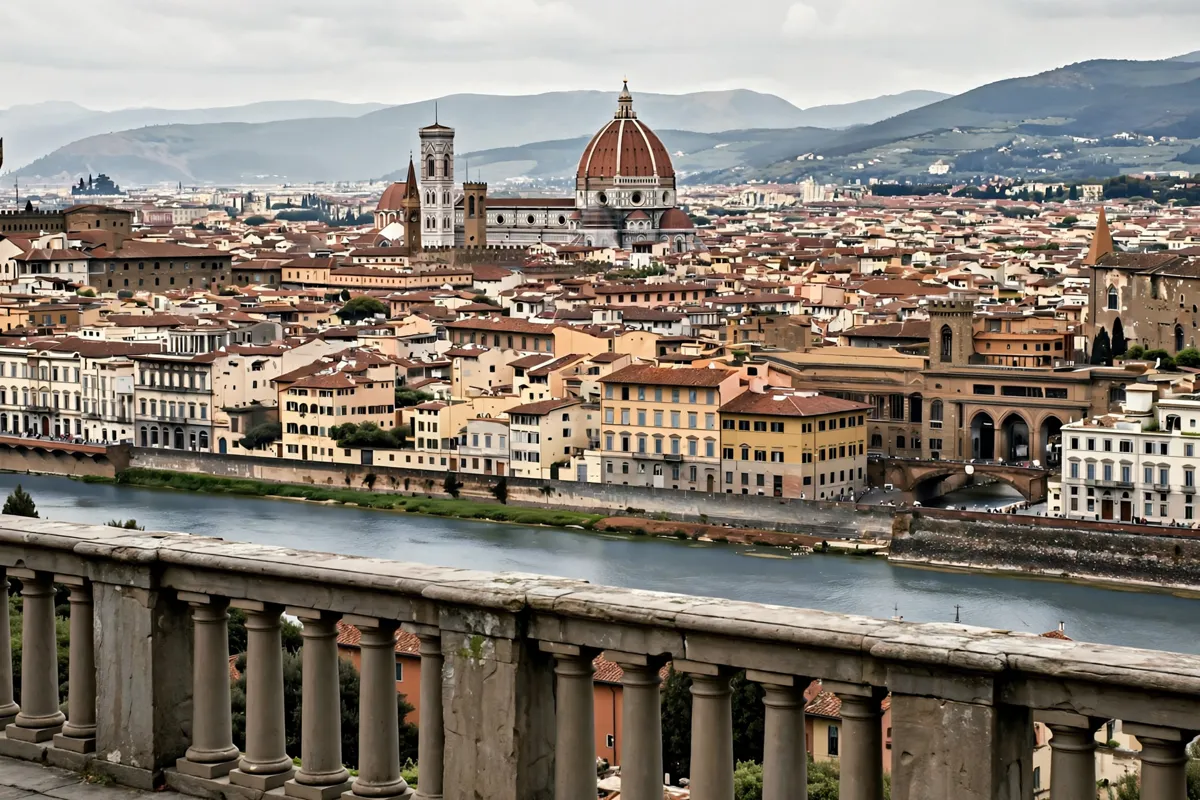
Piazzale Michelangelo and Nearby Green Space
Completed in 1875, Piazzale Michelangelo was designed by architect Giuseppe Poggi, along with the converging Viale dei Colli avenues. Bronze copies of Michelangelo’s David and four Allegories stand at the square, with Florence’s skyline spread out beyond them.
For a nearby garden stop, the Rose Garden is below the square at Viale Giuseppe Poggi, 2. It is partly accessible and displays works by Jean-Michel Folon alongside views of Florence’s historic centre. Other green spaces nearby include the Iris Garden and Michelangelo Park; San Miniato al Monte sits farther uphill.
City bus 13 serves Piazzale Michelangelo. If you’re extending your walk, you can link the square with the Rose Garden or Michelangelo Park before continuing farther uphill to San Miniato al Monte.
Opening Hours, Tickets and Seasonal Access
Boboli opens daily at 8:15. Closing times vary by month and daylight-saving period: 16:30 in January, February, November and December; 17:30 in March and October under standard time; 18:30 in March under daylight saving time and in April, May, September and October under daylight saving time; and 19:10 in June, July and August.
It closes on the first and last Monday of each month and on 25 December. Last admission is one hour before closing, and weather emergencies can affect access.
A full-price Boboli single ticket is €10 on the day of entry or €13 when bought before the entry date. Eligibility-based reduced tickets are €3, and free tickets are €0.
A combined Pitti Palace and Boboli ticket is €22 on the day of entry or €25 when bought before the entry date. The PassePartout ticket gives one admission each to the Uffizi, Pitti Palace and Boboli Gardens over five consecutive days; it costs €40, or €58 with the Vasari Corridor included.
Before you go: opening hours, ticket details and access can change, so check the official site before you go.
Getting Around Between Green Spaces
Boboli and Bardini each have their own paths and features, so plan them as separate garden visits rather than assuming one continuous route. At Boboli, choose an entrance that suits your plans and note that the garden has several exits as well.
For a shorter outing centred on a view, Piazzale Michelangelo has nearby green spaces, with the Rose Garden below the square and San Miniato al Monte farther uphill.
Cascine Park offers another kind of outdoor break: it is a large green space where you can picnic, rent bicycles or skates, and use the Pavoniere swimming pool in summer. The park began as Medici hunting and farming land and became a permanent public park under Elisa Baciocchi between 1807 and 1815.